Media
A curated selection of content, interviews, and media appearances — all in one place.
Filter by type
Filter by author
Showing 30 media item
Why Lakes Shrink: The Decisions behind Water Crises

Founder - Political Advisor, International Security and Defence Policy Expert
Shrinking lakes have become one of the most visible symbols of climate change. Yet their decline tells a more complex story. Alongside a changing climate, decisions about water management, agriculture and development play a decisive role in water crises—and can shape the fate of a country’s or region’s water resources for decades.
Aurel Stein: The Hungarian Scholar Who Rediscovered the Geography of Eurasia
Founder - Political Advisor, International Security and Defence Policy Expert
“I have had a wonderful life and it could not be concluded more happily than in Afghanistan which I have wanted to visit for sixty years.” Few sentences could capture Aurel Stein’s life more precisely. When Sir Aurel Stein died in Kabul in October 1943, at the age of eighty, he had finally reached a country he had been trying to enter for decades and much of his scholarly life. Afghanistan was not only an extraordinary journey for him, but the country also lay near the geographical centre of the territory that had occupied Stein for more than half a century.
György Almásy: Documenting Central Asia at the Turn of the Century
Founder - Political Advisor, International Security and Defence Policy Expert
At the beginning of the twentieth century, Central Asia was no longer the largely inaccessible world through which Ármin Vámbéry had travelled in disguise four decades earlier. The Russian Empire had consolidated its rule over much of the region, railways were reaching Tashkent and Andijan, and the imperial administration was transforming the political and economic landscape of Turkestan. Yet beyond the expanding cities and transport networks, large parts of the Tien Shan and the societies inhabiting its valleys and high pastures remained little documented by European scholarship.
The flamingo revolution of Albania
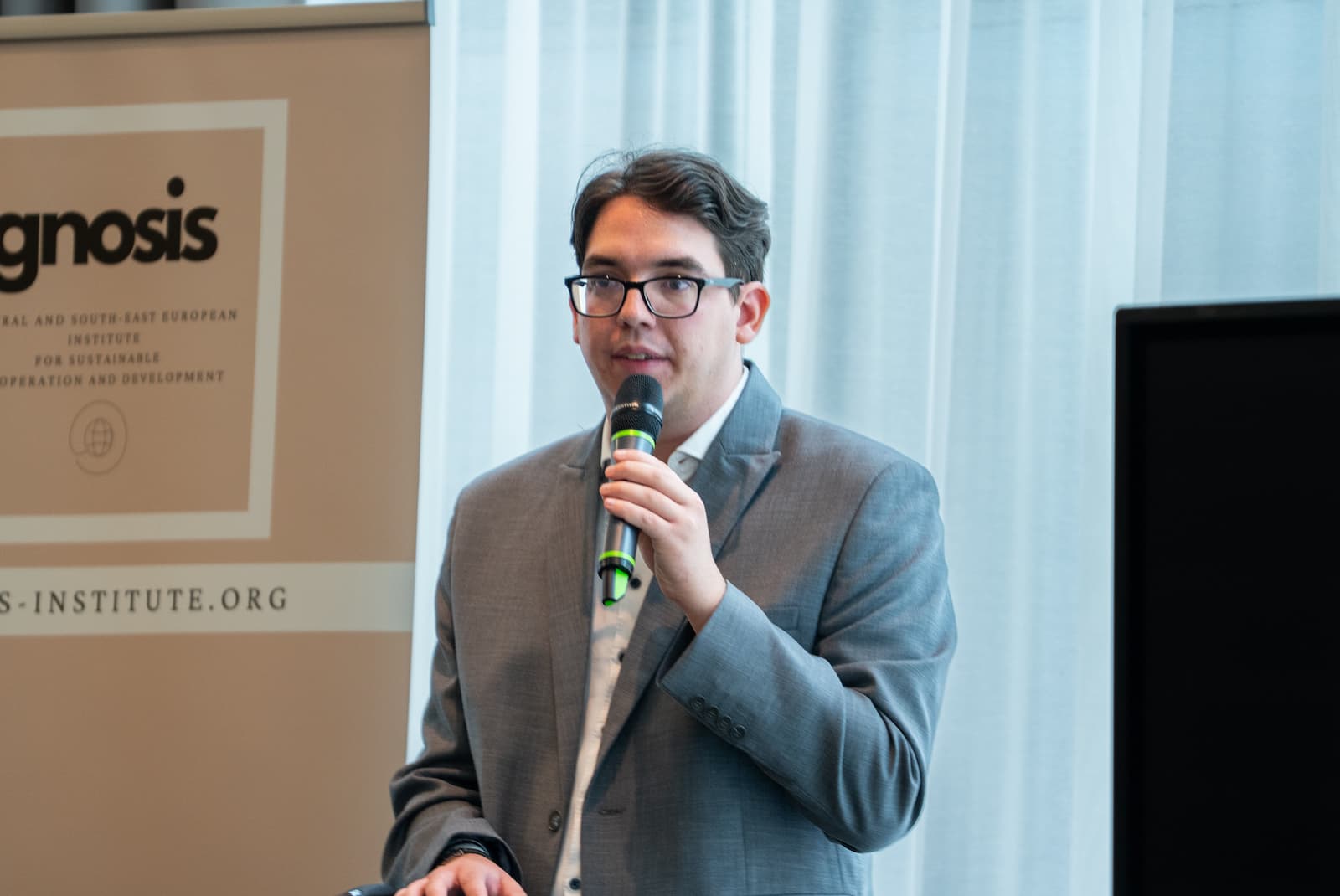
Strategic Analyst, Southern Europe Expert
The Serbs are not the only ones protesting for the well-being of their country and their environment. Albanians have taken to the streets repeatedly during the past year to express their anger at the corrupt elites and the threat to their unique environment. Join us in exploring the root causes of the protests, why they are labeled as the "flamingo revolution" and what does the Trump family have to do with the entire affair. Our guest this time is Árpád Párducz, a Hungarian expert on the Balkans.
Europe’s Sahara on Fire: Wildfire Trends in Serbia
Strategic Analyst, Southern Europe Expert
Serbia is facing a severe environmental crisis as uncontrolled wildfires, fueled by the summer heatwave, ravage the country. The problem is particularly serious because wildfires are also severely damaging one of Europe’s most distinctive geological landscapes. The ecological emergency is not limited to Serbia itself and points to a new, increasingly widespread and dangerous trend for the entire Western Balkans.
Iran’s Foreign Policy Beyond the Headlines – Is it Losing the South Caucasus?
Founder - Political Advisor, International Security and Defence Policy Expert
Two quarters later: CBAM and the Western Balkan electricity trade
Strategic Analyst, Southern Europe Expert
The Carbon Border Adjustment Mechanism (CBAM) entered its definitive regime on January 1, 2026. Early regional assessments focused on its long-term structural risks for the Western Balkan electricity markets, but the commercial and operational realities of the past six months have shifted the debate from theoretical compliance to immediate market impacts.
China's Green Push in Central Asia
Founder - Political Advisor, International Security and Defence Policy Expert
China has long been criticised for not being green enough. Not pursuing the global climate goals, while continuously emitting more and more GHG. For years, much of the international debate – especially in the West – framed China primarily as the world's largest polluter, often overlooking the country's distinct development priorities and its own evolving approach to the green transition. Because a lot has changed since President Xi Jinping first mentioned his "clear waters and green mountains" endeavor. The concept has since grown into a foundational doctrine guiding China's green transition and sustainable development initiatives, which now the country successfully exports to outbalance any major competitors in terms of the green transition. This article provides a broad overview of China's green ambitions in Central Asia.
More Than a Linguist: Mándoky Kongur's Legacy
Founder - Political Advisor, International Security and Defence Policy Expert
To understand a region, one must first understand its people. Global attention has increasingly turned toward Central Asia in recent years. Yet much of today's discussion revolves around tangible strategic interests: transport corridors, critical minerals, energy security, and competition among major powers. While these issues dominate contemporary policy debates, they represent only one layer of a region whose significance has long been recognised by generations of scholars. Researchers regarded Central Asia not as a remote periphery, but as one of Eurasia's defining historical and cultural spaces, shaped by centuries of migration, linguistic exchange, cultural interaction and shared historical experiences.
Tajikistan's Chinese Gamble
Founder - Political Advisor, International Security and Defence Policy Expert
For most observers, Tajikistan is the forgotten country of Central Asia. It has neither Kazakhstan's vast oil reserves nor Uzbekistan's economic dynamism. It is not the region's demographic powerhouse, nor is it the largest recipient of Chinese investment. Yet Beijing has quietly transformed Tajikistan into one of the most revealing examples of what the Belt and Road Initiative can achieve and what it can cost.
The Taliban's Foreign Policy: Recognition Without Recognition
Founder - Political Advisor, International Security and Defence Policy Expert
Five years after the Taliban returned to Kabul, the most important question surrounding Afghanistan's international position may no longer be who formally recognises its government. A more revealing question is who is willing to deal with it as one. And the answer is more surprising than we would first think.
Kyrgyzstan: Infrastructure, Democracy and China's Delicate Balancing Act
Founder - Political Advisor, International Security and Defence Policy Expert
Among Central Asia's five republics, Kyrgyzstan occupies a unique position. It is the region's smallest open political system, its most politically volatile state, and increasingly one of China's most important strategic neighbors. Unlike resource-rich Kazakhstan or gas-dependent Turkmenistan, Kyrgyzstan offers Beijing something far less tangible but arguably just as valuable: geography.
Turkmenistan: The Risks of Having Only One Customer
Founder - Political Advisor, International Security and Defence Policy Expert
Among Central Asia's five republics, Turkmenistan is perhaps the most enigmatic. It possesses the world's fourth-largest proven natural gas reserves, follows a policy of permanent neutrality recognized by the United Nations, and remains one of the most politically isolated countries in the world. Yet despite this isolation, Turkmenistan has become indispensable to one global power: China.
Uzbekistan: The New Center of Gravity in Central Asia
Founder - Political Advisor, International Security and Defence Policy Expert
For decades, Kazakhstan has dominated discussions about Central Asia. Its vast territory, abundant natural resources and strategic location have made it the region's most recognizable state. Yet while much of the world's attention remained fixed on Kazakhstan's oil fields, another country quietly began transforming itself. Increasingly, the future political and economic center of gravity of Central Asia may lie several hundred kilometers to the south – in Uzbekistan. Unlike Kazakhstan, Uzbekistan's greatest strategic asset is not energy. It is people.
Beyond ISIS - A Terrorist Group the World Keeps Ignoring
Founder - Political Advisor, International Security and Defence Policy Expert
In the last few decades, terrorist attacks have increased significantly across the globe, and media coverage has expanded alongside them. For many Europeans, names such as ISIS and Al-Qaeda came to define the public perception of terrorism, dominating headlines and shaping security debates for years. However, the reality is far more complex. Contemporary terrorism extends well beyond a handful of well-known organizations, involving a diverse range of actors, motivations, ideologies, and regional dynamics that cannot be understood through a single lens. Have you ever heard of the East Turkestan Islamic Movement (ETIM)? The group, composed primarily of Uyghur militants originating from China's Xinjiang region, has operated across several countries over the years, with its members and affiliated networks appearing in Afghanistan, Pakistan, and other parts of Central and South Asia.
Kazakhstan: China's Gateway to Eurasia
Founder - Political Advisor, International Security and Defence Policy Expert
For years, Kazakhstan has been described primarily as an energy powerhouse. Rich in oil, gas and uranium, the country is frequently portrayed as little more than a supplier of strategic commodities to global markets. While this narrative is not incorrect, it misses the much larger geopolitical reality. China does not simply need Kazakhstan for its natural resources—it needs Kazakhstan as the indispensable bridge connecting East Asia with Europe. Without Kazakhstan, Beijing's vision of a connected Eurasian continent would remain largely theoretical.
Azeris in Iran: Integration, Identity, and Strong Presence
Founder - Political Advisor, International Security and Defence Policy Expert
In the last couple of years, international attention surrounding Iran has often focused on its strained relationship with the West, the nuclear program and the regional swings shaped by its proxies. However, one of the country's most significant internal dynamics receives far less attention: the millions of ethnic Azeris living inside Iran.
Diversifications Without Illusions - What Can Europe Expect From Kazakhstan on Energy
Founder - Political Advisor, International Security and Defence Policy Expert
Kazakhstan is a very important player in terms of resources, hence in the global energy architecture. The country is a significant producer of crude oil and natural gas, coal, and is a relatively important energy exporter. While Kazakhstan's energy mix still largely depends on fossils, strengthening the availability of renewable sources is an important policy objective. This article examines why Kazakhstan can play an important role in European energy aspirations.
From Trusted Friends to Enemies – How Pakistan-Afghanistan Relations Turned into Open War
Founder - Political Advisor, International Security and Defence Policy Expert
The relationship between Pakistan and Afghanistan, and especially with the Taliban, has undergone a significant transformation over the past three decades. We can therefore state that the escalation of this conflict has been a recurring risk for years.
Third renaissance of Uzbekistan – Marking the 10th year of Mirziyoyev in Office
Founder - Political Advisor, International Security and Defence Policy Expert
In recent years, President Shavkat Mirziyoyev has popularized the concept of the "Three Renaissances of Uzbekistan" to define the nation’s historical achievements and prospects for renewal. Marking his first ten years in office, this period has seen significant political, economic, and social reforms that have reshaped Uzbekistan's landscape and international standing. Blanka Benkő-Kovács's article on this topic was published on the LCTS website.
What Lies in the Heartland of Global Interests - Eurasia
Founder - Political Advisor, International Security and Defence Policy Expert
Considering the list of the most influential geopolitical thinkers of the past centuries, Halford Mackinder undoubtedly stands out as one of the most transformative figures in the field. His publication, titled the "The Geographical Pivot of History", which later was revised in the "Democratic Ideals and Reality", known as the Heartland theory, might be decisive when evaluating today's connectivity initiatives. In this article, we examine whether his statement "Who rules East Europe commands the Heartland, who rules the Heartland commands the World-Island, who rules the World-Island commands the world" still stands.
Diversification without Illusions: What can Europe expect from Azerbaijan on energy
Founder - Political Advisor, International Security and Defence Policy Expert
In the last few years, Azerbaijan has emerged as one of the European Union's prospective, alternative energy partners in the aftermath of the Russian‒Ukrainian war. Through the Southern Gas Corridor and the expansion of gas exports toward Europe, Baku has strengthened its geopolitical relevance while presenting itself as a reliable supplier in an increasingly fragmented energy landscape. Yet the country's long-term role in Europe's diversification strategy should be assessed without illusions.
Costs of War – The Iran war will have long-term consequences
Founder - Political Advisor, International Security and Defence Policy Expert
The war on Iran has consequences that reach far beyond the battlefield and the Persian country itself. What in the first days might appear to be a regional military escalation has increasingly evolved into a broader geopolitical, economic, and energy crisis with global implications. From disrupted energy markets and rising inflation to declining public trust and accelerating geopolitical fragmentation, the effects of the war are already being felt across continents – specifically in Europe.
Fragile Ceasefire Agreement
Founder - Political Advisor, International Security and Defence Policy Expert
Our founder, Benkő-Kovács Blanka, spoke on LiveNOW from FOX about the Iran war, the fragile ceasefire, and the expected consequences.
Why the Turkic World and the United States Need Each Other Amidst a Fragmenting Middle East
Founder - Political Advisor, International Security and Defence Policy Expert
Many were surprised that Turkic countries were included in Donald Trump’s Board of Peace. However, it is nothing to be surprised by. In the age of enhanced connectivity, prosperity in neighboring countries cannot be understood without each other and this is especially true for the Turkic World and the Middle East.
Why Water Unrest Looks Different in Iran and in Central Asia?
Founder - Political Advisor, International Security and Defence Policy Expert
Water is a critical, often-overlooked national security issue nowadays. World Bank data even shows that 40% of global freshwater demand is projected to exceed supply by the end of this decade. It can therefore be stated that it is not a problem to be neglected. Especially for certain parts of the globe, for instance in the Middle East and in Central Asia. And there are particularly vulnerable countries where the water issue itself is already a security threat. Namely Iran and Uzbekistan. But why does water unrest look so different in these countries? The new op-ed on this issue written by Blanka Benkő-Kovács was published on the LCTS website.
What Can Uzbekistan Offer to Europe in Terms of Energy?
Founder - Political Advisor, International Security and Defence Policy Expert
As Europe accelerates its search for diversified energy cooperation, Uzbekistan stands out as a pivotal player with substantial natural gas reserves and growing renewable capacity.
Diversification Without Illusions: What the Turkic World Can Offer Europe on Energy - Türkiye
Founder - Political Advisor, International Security and Defence Policy Expert
The first part of a series examining the energy policy significance of Turkic countries, focusing on Türkiye's role in European energy security.
The Caspian Bottleneck: Why Cross-Caspian Projects Stall and What Could Unlock Them?
Founder - Political Advisor, International Security and Defence Policy Expert
The Caspian Sea, just like on the map, sits at the center of Eurasia's connectivity ambitions, yet it is more likely a valve rather than a bridge. In recent years, a number of Trans-Caspian projects have faced serious obstacles. But what exactly are these barriers, and what could unlock them to build a real bridge across the Caspian?
Can the Middle Corridor Deliver?
Founder - Political Advisor, International Security and Defence Policy Expert
For the past few years, the Middle Corridor, also known as the Trans-Caspian International Transport Route (TITR), has referred to a practical idea: moving freight between Western China and Europe via Central Asia and the Caucasus, then through Türkiye – mainly by rail, with a maritime leg in the middle.